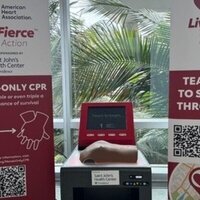


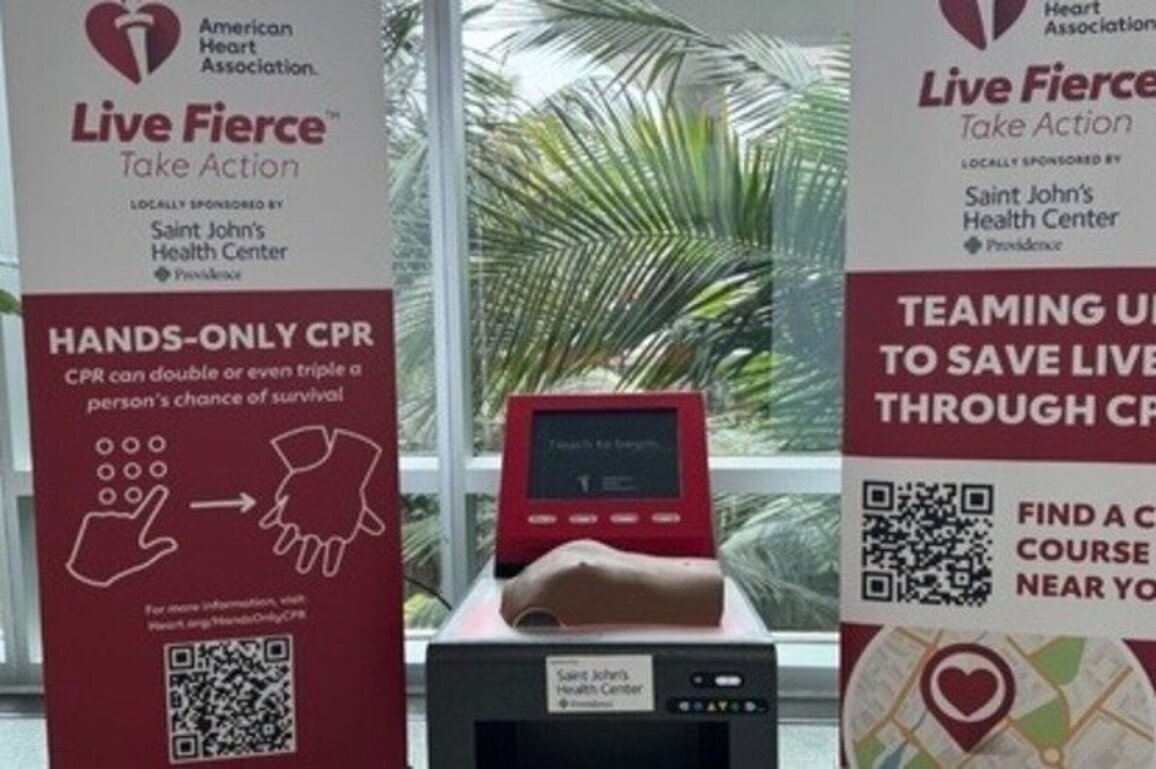
A new free kiosk at the Discovery Cube in Santa Ana can teach you the basics of hands-only CPR in just five minutes.
You simulate compressions on a mannequin, which has sensors to help you find the correct hand position, depth and rhythm for each movement.
Dr. Mohammed Shafie, associate clinical professor at the University of California-Irvine and a spokesperson for the American Heart Association, said people who get CPR right away are two to three times more likely to survive and avoid brain damage.
"When you have a cardiac arrest, the whole brain is not getting oxygen blood supply," Shafie explained. "You could have the potential for more severe injury after the cardiac arrest."
Nine in 10 people who suffer cardiac arrest outside of a hospital die and more than half do not receive bystander CPR. The kiosk is the first of its kind on the West Coast. It stays at the Discovery Cube through the end of spring, then moves to five more locations in Orange County over the next three years. It is sponsored by the Edwards Lifesciences Foundation and the American Heart Association.
The association's "Nation of Lifesavers" movement aims to double the survival rate from out-of-hospital cardiac arrests by 2030.
Melissa Ziebell, a physicist and survivor of cardiac arrest from Pasadena, is alive today thanks to CPR. She said she suffered cardiac arrest from a previously unknown heart defect while running a marathon in Paris, France.
"A little over a mile before the finish line, I just felt activity in my heart and fell down," Ziebell recounted. "The last thing I remember was seeing my legs not responding and they performed CPR on me to bring me back to life right away."
According to the American Heart Association, every year, more than 350,000 cardiac arrests occur outside of the hospital, and more than 20% occur in public places like airports and sporting facilities.
Source: Public News Service